
LAB2FAB
2022 WORKSHOP
SHEDDING LIGHT ON INNOVATION
September 25-27
Whistler, British Columbia
HOSTED BY

Shedding Light on Innovation
Micro-nanotechnology facilities at Canadian universities are a national asset for helping innovators advance and manage their R&D activities. The LAB2FAB bi-annual meeting provides a platform for industry, academic-based fabrication and characterization centres, and government labs to collaborate in overcoming their R&D challenges.
Our goal is to help all parties build their capacity and expertise to increase Canadian competitiveness in manufacturing of microsystems and nanotechnology innovations through team efforts to:
- Enhance connections among technology developers to maximize benefit from technology offerings throughout the Canadian ecosystem.
- Enhance access to infrastructure inside Canada and exchange value in cross-border partnerships.
- Connect funding opportunities to technology resources and end users.
- To encourage rich exchange among all participants, every speaker session also dedicates time for plenary discussion.
Thank You to Our Sponsors
GOLD SPONSOR

SILVER SPONSORS

ACADEMIC LAB SPONSORS

Program
Day 1 - Sunday, September 25
17:00 – 21:00
Registration | Welcome Networking Session
Day 2 - Monday, September 26
07:30 – 08:45
Registration | Networking Breakfast
08:45 – 09:00
Welcome
09:00 – 10:30
Session 1: Lab of the future
- Innovations in the usage and management of nanofabrication labs.
- What noteworthy processing capabilities are emerging in open-access facilities?
- What expertise and services are users looking for in facilities?
- What do success stories teach us about the most promising R&D opportunities that can benefit from laboratory capabilities?
Dominique Drouin
Session Chair
Volker Sorger
President / Co-Founder
Optelligence Company
Philippe Babin
CEO
AEPONYX Inc.
Martin Laforest
Director – Quantum Strategy
ACET
10:30 – 11:00
Networking Break
11:00 – 12:30
Session 2: Bridging discovery to production
- Positioning technology development for commercialization and scale-up.
- Success stories of climbing the TRL ladder, technology transfer, and scale up.
Alan Renaudin
Session Chair
Alissa M. Fitzgerald
Founder & CEO
A.M. Fitzgerald & Associates, LLC
Chiara Alessandri
Luceda Photonics
Collin Twanow
Director, Technology
Teledyne MEMS
12:30 – 13:30
Networking Lunch
13:30 – 14:50
Session 3: R&D Milestones and Future Talent
- Share company vision, technology goals, and R&D milestones.
- What skills are needed in tomorrow’s microsystems workforce?
- Connect with Rising Stars for follow-up networking.
Karin Hinzer
Session Chair
Ben Wiltshire
Modeling & Test Senior Engineer
Zinite
Vallen Rezazadeh
Founder and CEO
TransEON Inc.
Serge Ecoffey
Associate Professor
Université de Sherbrooke
Alan Renaudin
Director, Business Development, Strategic Partnerships and Marketing C2MI
Dominic Marchand
Director Special Projects, Director 1QBit Sherbrooke
1QBit
Clint Landrock
Vice President, Technology & Innovation
Meta Materials Inc.
14:50 – 15:20
Networking Break
15:20 – 16:20
MNT Labs Cataloging and Roadmap Session
16:20 – 18:00
Adjourn
16:30 – 17:30
BOAF: Open-Source HW for Smart Edge connected IoT Sensors (Diamond Head Room)
18:00 – 19:00
Reception
19:00 – 22:00
Dinner
Day 3 - Tuesday, September 27
07:30 – 08:30
Networking Breakfast
08:30 – 09:00
Welcome
09:00 – 10:45
Session 4: Photonic Integrated Circuits – A Flourishing Canadian Ecosystem
- An ecosystem view of the silicon photonics value chain in Canada.
- Examples of advancing photonics developments from concept to product.
- Connect to a network initiative or proposal.
- Understand industry needs in business and process capability.
Mirwais Aktary
Session Chair
Lukas Chrostowski
Professor of Electrical and Computer Engineering, University of British Columbia
Alireza Loghmany
Engineering Team Leader
National Research Council Canada
David Buckley
VP, Development Engineering
Sanmina
Hamid Arabzadeh
Chairman and CEO
Ranovus Inc.
10:45 – 11:15
Networking Break
11:15 – 12:15
Session 5: Taking the Next Steps Together
- What megatrends that will shape the next 10 years? Where should R&D efforts focus?
- What have the last two years taught us about the possibilities of a better normal?
- What actions should be taken after this workshop to pursue specific opportunities?
Lukas Chrostowski
Session Chair
Gord Harling
CEO
CMC Microsystems
Alissa M. Fitzgerald
Founder & CEO
A.M. Fitzgerald & Associates, LLC
Philippe Babin
CEO
AEPONYX Inc.
Gem Shoute
Co-founder & CEO
Zinite
Andrew Fursman
Co-founder and CEO
1QBit
12:15 – 12:30
Adjourn workshop
12:30 – 13:30
Networking Lunch
Virtual Seminars
Virtual Seminar 1
CMC’s plan for Advanced Technology Manufacturing in Canada
Nanofabrication for a Photonic Quantum Computer
Featuring Toronto Nanofabrication Centre
Virtual Seminar 2
AEPONYX, a journey of collaboration
Lukas Chrostowski – University of British Columbia
Pierre Berini – University of Ottawa Nanofab
Virtual Seminar 3
MEMS Product Development: Lab to Fab Technology Transfer
Clint Landrock – CTO Nanotech Security
4D LABS – A Materials Science Core Facility
Virtual Seminar 4
A New Age of Moore’s Law: A Canadian Opportunity at the Leading Edge
DevTeQ – The Next Step in Quantum Infrastructure
Pinder Dosanjh – QCoLab, UBC
Virtual Seminar 5
Naresh Miriyala – Stathera
Vallen Rezazadeh – Towards a High-Value Semiconductor Supply Chain in Canada
nanoFAB – Process highlight: Multilevel deep etching in silicon
Virtual Seminar 6
Bringing your MEMS and PIC to the next level with C2MI
An Advanced Packaging Ecosystem From Concept to Volume
Featuring a Micro-Nano Technology Lab
Centre for Emerging Device Technologies, McMaster University
Speakers

Alan Renaudin, Jr. Eng., Ph.D.
Alan Renaudin is a business development director at C2MI, Strategic partnership and Marketing and IEEE Entrepreneurship manufacturing resources lead. Entrepreneur at heart and intrapreneur on the field, he was previously involved in the Photonic business as an entrepreneur with a strong background in lab-On-chip applications and he holds a doctorate in microelectronics. Passionate about driving the deep tech industry into a new era of innovation ecosystem, Alan focuses on accelerating the development and commercialization of microelectronics components enabling digital technologies. Confident that a collaborative ecosystem, involving international industrial, governmental, and academic players is key to accelerating commercialization, he is unfolding a world-class network, based on C2MI team, partners, and collaborators, dedicated to the maintenance of a market driven dynamic and rigorous expertise.

Alireza Loghmany, PhD
Engineering Team Leader (CPFC)
Advanced Electronics and Photonics Research Centre
National Research Council Canada
Dr. Alireza Loghmany joined National Research Council Canada in 2014 where his extensive technical knowledge of GaN HEMT device physics, design, processing, and characterization was vital to the success of the Gallium Nitride program at Advance Electronics and Photonics Research Centre. Alireza subsequently joined CPFC in 2016 to help AEP’s successful partnership with Canadian companies. Shortly after, He became the CPFC Engineering Team Lead in 2019 where Alireza and his team have been responsible for client interactions in the AEP Portfolio, develop and maintain all of the CPFC fabrication processes and ensures client deliverables are properly executed. Alireza received his Masters and PhD in Electrical and Computer Engineering from Concordia University in Montreal, where his research was mainly focused on design, microfabrication, and characterization of Gallium Nitride based High Electron Mobility Transistors (HEMTs).

Alissa M. Fitzgerald, Ph.D.
Founder & CEO A.M. Fitzgerald & Associates, LLCT
A.M. Fitzgerald & Associates, LLC
Dr. Fitzgerald founded A.M. Fitzgerald & Associates, LLC (“AMFitzgerald”), a MEMS product development company located in the Bay Area of California, in 2003. She has over 25 years of engineering experience in MEMS design, fabrication and product development. Having developed more than a dozen distinct MEMS devices, such as piezoresistive pressure sensors, ultrasound transducers, and infrared imagers, she now advises clients on the entire cycle of microelectronic product development, from business and IP strategy to supply chain and manufacturing operations. Prior to founding AMFitzgerald, Dr. Fitzgerald worked in engineering and management positions at the Jet Propulsion Laboratory, Orbital Sciences Corporation, and Sensant Corporation, now part of Siemens. She received her bachelor’s and master’s degrees from MIT and her Ph.D. from Stanford University in Aeronautics and Astronautics. Dr. Fitzgerald is an author of MEMS Product Development (Springer, 2021), has numerous journal publications, and holds nine patents. She is a member of the SEMI-MSIG Standards Committee and served as a board director on the MEMS Industry Group (MIG) Governing Council from 2008-2014. In 2013, she was inducted into the MIG Hall of Fame. She is currently a board director of Rigetti Computing and of the Transducer Research Foundation.
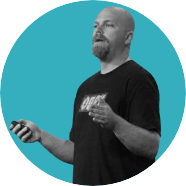
Andrew Fursman
Co-founder and CEO
1QBit
Andrew Fursman is a Co-Founder of 1QBit and serves as its Chief Executive Officer. Andrew was a Co-Founder of Satellogic Nano-Satellites, and Co-Founder of Cloudtel Communications. Andrew sits on the World Economic Forum Computing Futures Council and the IEEE Quantum Computing Standards Committee. Andrew is a fellow at the University of Toronto and the University of British Columbia, as well, a faculty member at Singularity University.

Ben Wiltshire
Modeling & Test Senior Engineer
Zinite
Ben Wiltshire joined Zinite in 2021 as a senior engineer working on testing and modelling devices at the nanoscale level. He graduated from University of Alberta in 2013 and 2017 with BSc. Engineering Physics and MSc. Electrical Engineering, respectively. He finished his PhD from the University of British Columbia in 2022 on the topic of microwave sensor analysis, with a special interest in integrating semiconductive materials for sensing applications. He was awarded the NSERC Canadian Graduate Student Scholarship from 2019-2022 and has published over 30 journal and conference articles.

Chiara Alessandri
Sales and Application Engineer
Luceda Photonics
Chiara obtained her master degree in Physics with summa cum laude at Università degli Studi di Milano in 2015 with the thesis “Production and characterisation of high speed graphene-based broadband optical modulators” carried out at imec (Belgium). She continued the work started with the master thesis during her PhD in the silicon photonics group at imec, where she was the main researcher focused on graphene integration in silicon photonics. In 2020 she received the Doctoral Degree (PhD) in Photonics Engineering from Ghent University with the thesis entitled “Graphene-Silicon Photonics Integrated Devices for Optical Interconnects”. After her PhD, she joined Luceda Photonics as application engineer to take up the challenge of putting her technical skills into practice and combining them with soft skills necessary for a customer-facing job. She has since taken over the role of product marketing manager, overseeing Luceda’s marketing efforts, including market research, positioning and messaging. She also guides customers through the technical sales process, gives regular individual or group trainings to teach how to design using the IPKISS Photonics Design Platform and creates training material and PIC design tutorials on Luceda’s online learning hub, Luceda Academy. In 2020, she started Luceda’s partnership with SiEPICfab and has since coordinated Luceda’s relations and contributions to the consortium.

Clint Landrock, M.A.Sc.
Vice President, Technology & Innovation
Meta Materials Inc.
Clint is a BC technology and business leader with global experience and winning track record of leading multi-disciplinary teams from start-ups through to mature product suppliers. Areas of expertise include advanced optics, nano-fabrication, holography, anti-counterfeiting and currency security. Clint co-founded NanoTech Security Corp., and acted as its Chief Technology Officer growing the company from a small start up to nearly $10M per year in revenue within 5 years. Nanotech was acquired by Meta Materials for $91M CAD in 2021.

Collin Twanow
Director, Technology
Teledyne MEMS
Collin Twanow serves as Director, Technology for Teledyne MEMS and is responsible for matching technical solutions to the fabrication need for both current and existing customers. He joined Micralyne in 1999 and has held a number of roles ranging from Development Engineer, Director of R&D, Product Line Manager, and Vice President of Sales and Engineering in the Edmonton, Canada fab.
Collin has managed development programs for many devices including optical telecom switches and silicon optical benches, implantable medical devices, MEMS microphones, pressure sensors, and components for military applications. He is a Professional Engineer with a MEng degree, focused on Microfabrication. Collin has also lectured in MEMS and microfabrication courses at the University of Alberta.
Clint is a BC technology and business leader with global experience and winning track record of leading multi-disciplinary teams from start-ups through to mature product suppliers. Areas of expertise include advanced optics, nano-fabrication, holography, anti-counterfeiting and currency security. Clint co-founded NanoTech Security Corp., and acted as its Chief Technology Officer growing the company from a small start up to nearly $10M per year in revenue within 5 years. Nanotech was acquired by Meta Materials for $91M CAD in 2021.

David Buckley
VP, Development Engineering
Sanmina (Advanced Microsystems Technologies Division)
I have been the VP of Development Engineering at Sanmina Advanced Microsystems Technologies Division for almost three years. My engineering organisation specialises in Optical, RF, Microelectronic and Integrated Solutions engineering development, and associated process engineering and test development. We help customers realise their product vision – from concept through to volume manufacturing.
I grew-up in Wales and went to university in England. I graduated from the University of Bath with a B.Sc. in Engineering (RF and Control Systems) and a Ph.D. in the Design of High Power Semiconductor Lasers. (I must confess I chose Bath because of its excellent sports program… but ended up loving technology and appreciating what an excellent school it was!)
My first job was in the design of quantum, semiconductor lasers at STC in England. Nortel Networks acquired STC in 1989 and in the ensuing years, I moved to Ottawa, Canada (1997) to continue my career at Nortel. Following 14 years of a variety of engineering and business roles, I caught the technology bug and worked in Canadian technology start-ups and small/mid-sized businesses where I broadened my engineering and business experiences. Some of my engineering experiences include Plasmon Guide Optics at Spectalis, early-stage Planar Lightwave Circuits at Kymata Canada, NanoFab applications at Micralyne and RF systems at Dragonwave. These broadened my “operational engineering” capability …looking at ways to deliver engineering programs and technologies. Despite the roller-coaster of a ride in technology development, I am still as excited about different technologies and their applications as the day I started in industry.
At a personal level, I love living in Ottawa. When I get the opportunity, I like to get out into the countryside with my wife and dog and do some photography… or just chill in my back garden with a BBQ fired up, a beer in-hand and my family around me.

Dominic Marchand
Director Special Projects, Director 1QBit Sherbrooke
1QBitVP, Development Engineering
Sanmina (Advanced Microsystems Technologies Division)
Dominic is Director of 1QBit Sherbrooke and Director of Special Projects at 1QBit, a Canadian leader in quantum computing and artificial intelligence (AI). The company builds value at the intersection of industry and emerging hardware and it takes a broad approach to building its R&D roadmap by melding expertise in classical AI and optimization with quantum technology.
He played a key role in the integration of 1QBit into the hardware innovation and quantum ecosystems in Québec and the continued deepening of its connections to the Québec innovation zones and its stakeholders.
Dominic studied computer engineering and physics at Université Laval, Universität des Saarlandes, and the University of British Columbia before joining 1QBit’s newly created research team.

Gem Shoute
Co-Founder and CEO
Zinite
Gem Shoute co-founded and is CEO of Zinite. Zinite builds leading edge semiconductor technology unlocking 3D architectures for future chips. She received her PhD at the University of Alberta in solid-state electronics, and did her post-doctoral fellowship at Berkeley Labs/U.S. Department of Energy where she worked on the semiconductor innovation ecosystem in the post-Moore Era.

Gord Harling
President and CEO
CMC Microsystems
Gordon Harling received a Bachelor’s degree in Applied Science from the University of Toronto and a Maîtrise en Ingénierie Physique from Polytechnique Montréal. He has worked in Research and Development at large companies such as Mitel, NovAtel, and DALSA. He has been a founder and CEO of several start-up companies including Goal Semiconductor, Elliptic Technologies, and Innotime Technologies. He joined CMC Microsystems in February 2018 as President and CEO.
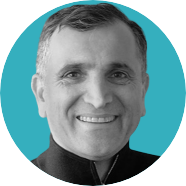
Hamid Arabzadeh
Chairman, President and CEO
Ranovus Inc.
Mr. Hamid Arabzadeh has been the Chairman and CEO of Ranovus Inc., a leading technology provider of photonic interconnect solutions for AI/ML workloads in hyper scale data centres since its inception in 2012.
Prior to Ranovus, Mr. Arabzadeh was the Chairman and CEO of CoreOptics Inc. in Nuremberg Germany, an innovative provider of digital signal processor based photonic subsystems for high-capacity metro and long-haul optical networking applications. CoreOptics Inc. was acquired by Cisco (NASDAQ:CSCO) in 2010.
Prior to CoreOptics, Mr. Arabzadeh held various senior management positions at Nortel Networks in Mexico, Brazil, and England. Mr. Arabzadeh’s last role at Nortel Networks was VP & GM of Next Generation Metro Optical business unit.
Since his return to Canada in 2010, Mr. Arabzadeh has co-Founded and co-Founded several Canadian scaleups in fields of Security and Healthcare with an eye to benefit Canada in a competitive Data and IP driven global economy.
Mr. Arabzadeh holds a B.A.Sc. from University of Waterloo in Electrical and Computer Engineering and an MBA from McGill University.

Lukas Chrostowski, PhD
Professor of Electrical and Computer Engineering
University of British Columbia
Lukas Chrostowski is a Professor of Electrical and Computer Engineering at the University of British Columbia, Vancouver, BC, Canada. Born in Poland, he earned the B.Eng. in electrical engineering from McGill University and the PhD in electrical engineering and computer science from the University of California at Berkeley. With research interests in silicon photonics, optoelectronics, high-speed laser (VCSEL) design, fabrication and test, for applications in optical communication systems and biophotonics, he has published more than 200 journal and conference publications.
He co-edited a book “High-Speed Photonics Interconnects” (2013), and co-authored the book “Silicon Photonics Design” (Cambridge University Press, 2015). Dr. Chrostowski served as the co-director of the University of British Columbia AMPEL Nanofabrication Facility (2008-2017). He is the Program Director the NSERC CREATE Silicon Electronic-Photonic Integrated Circuits (Si-EPIC) research training program in Canada, and has been teaching numerous silicon photonics workshops and courses since 2008.
He spent his 2011-12 sabbatical at the University of Washington, Seattle, with Michael Hochberg’s group. Chrostowski received the Killam Teaching Prize at the University of British Columbia in 2014. He was an elected member of the IEEE Photonics 2014-2016 Society Board of Governors and serves as the Associate VP of Education (2014-). He was awarded a Natural Sciences and Engineering Research Council of Canada Discovery Accelerator Supplements Award in 2015.

Martin Laforest, PhD
Director, Quantum Strategy
ACET
Dr. Martin Laforest is the Director of Quantum Strategy for the Sherbrooke Quantum Innovation Hub and the deep-tech incubator ACET Banque Nationale. Martin has developed a career communicating the complexity and strategic impacts of quantum technologies to key stakeholders, including government, the media, the general public and industry partners. Martin recently moved to Sherbrooke to lend his diversified experience for the development of an ambitious quantum ecosystem. He is also currently establishing a venture capital investment fund focused on supporting young quantum startups.
Prior to moving to Sherbrooke, Martin worked at the Institute for Quantum Computing in Waterloo where he lead the first quantum science outreach effort which is considered the gold standard for many academic institutions. Martin then experienced the startup world by joining ISARA Corporation, a quantum-safe cybersecurity company first in business development and then in product management.
Martin Hold a PhD in quantum computing from the University of Waterloo’s Institute for Quantum Computing.

Philippe Babin
CEO
AEPONYX Inc.
Philippe Babin, CEO of AEPONYX, has over 27 years of experience in product and market development in the telecommunication field. He co-founded AEPONYX Inc and leads the company, having raised to date over forty million dollars in equity and non-dilutive financing. With his team, he develops and brings to market photonic integrated circuits and products for a broad range of applications.
Philippe holds a Bachelor’s degree in Electrical Engineering and an MBA in Business Administration from the University of Sherbrooke. Mr. Babin began his career in 1994 with C-Mac Microcircuits Inc. as a Process Engineer and subsequently, he held various management positions, including Director of Substrates Manufacturing, contributing to the 600% growth in revenues of one the most profitable business units of the EMS division, delivering millions of telecom products per year.
Philippe Babin joined Mediatrix Telecom, a division of Media5 Corporation, in 2001 as Head of Research and Development. Within this company, he successively head Product Line Management, Sales Engineering, Sales and Marketing, for finally being appointed as General Manager, where he operated a complete business turnarounds. Before joining AEPONYX, Mr Babin started in 2012 his own sales and marketing agency in the field of telecommunications and IT.

Rick O’Connor
President & CEO
OpenHW Group
Rick O’Connor is President & CEO of the OpenHW Group a not-for-profit, global organization driven by its members and individual contributors where HW and SW designers collaborate in the development of open-source cores, related IP, tools and SW such as the CORE-V Family of open- source RISC-V cores. Previously Rick was Executive Director of the RISC-V Foundation which was launched by Rick in 2015. Today, under RISC-V International, the RISC-V ecosystem consists of more than 400 members building an open, collaborative community of software and hardware innovators powering processor innovation. With many years of Executive level management experience in semiconductor and systems companies, Rick possesses a unique combination of business and technical skills and over Rick’s career, he was responsible for the development of dozens of products accounting for over $750 million in revenue. Rick holds an Executive MBA degree from the University of Ottawa, Canada and is an honors graduate of the faculty of Electronics Engineering Technology at Algonquin College, Canada.

Serge Ecoffey
Associate Professor
Université de Sherbrooke
Serge Ecoffey is an Associate Professor of the Electrical and Computer Engineering department at Université de Sherbrooke in Canada. He earned a master’s degree in material science and a PhD in electrical engineering from the EPFL – Swiss Federal Institute of Technology Lausanne. He holds a C2MI research chair in microfabrication and integration and his research focuses on the development of chemical mechanical planarization processes, 3D back-end-of-the-line (BEOL) nanoelectronics, electron devices, micro-electro-mechanical systems (MEMS), heterogeneous integration, microfabrication and process integration.
He was a member of the Process and Manufacturing Technology and Advanced Logic Technology sub-committees of the IEDM International Electron Devices Meeting.

Vallen Rezazadeh
Founder and CEO
TransEON Inc.
Vallen Rezazadeh is the founder and CEO of TransEON Inc., an Edmonton startup developing next-generation wide-bandgap semiconductor technology for wireless applications in the telecom, defence, and space industries. He received the B.Sc. degree in engineering physics and the M.Sc. degree in electrical engineering with a specialization in solid-state electronics from the University of Alberta. Prior to founding TransEON, he oversaw in-line test and electrical metrology operations for IBM Research at their 300mm fab in Albany, NY, USA, where he was involved in the development of advanced processes including 5nm CMOS and MRAM.

Volker Sorger
President and Co-Founder
Optelligence Company
Volker J. Sorger is an Associate Professor in the Department of Electrical and Computer Engineering and the Director of the Devices & Intelligent Systems Laboratory at the George Washington University. Dr. Sorger is a co-founder and the President of Optelligence Company. For his work, Dr. Sorger received multiple awards including the Presidential Early Career Award for Scientists and Engineers (PECASE), the AFOSR Young Investigator Award (YIP), the Hegarty Innovation Prize, and the National Academy of Sciences Award of the year. He is a Fellow of Optica (former OSA), a Fellow of the German National Academic Foundation, and a Senior Member of IEEE and SPIE. Dr. Sorger serves as an Associate Editor for OPTICA and was the former Editor-in-Chief of Nanophotonics.
Rising Stars
Connecting the microsystems industry with highly qualified people in Canada
The Rising Stars program aims to connect industry technology developers with outstanding early-career talent to overcome challenges and strengthen industrial R&D in Canada.
What is a Rising Star?
Students and researchers gain valuable hands-on experience in micro-nanotechnology facilities. This skillset is an asset to industry for accelerated research and development. Rising Stars are post-secondary students identified to be among Canada’s best and brightest emerging talent in microsystems design and fabrication.
How to participate?
Rising Stars can be invited to LAB2FAB by their faculty supervisor or another workshop participant. Faculty supervisors who are not attending LAB2FAB themselves can nominate a Rising Star via e-mail to the contact below. Concisely explain why the nominee would be a competitive candidate for this program. Successful nominations will receive a code to enable the student to register directly.
Contact us for a Rising Stars registration code. Travel assistance is available for participants.
What to expect?
Rising Stars will be asked for a photo and short bio (50-100 words) to be published here and promoted at the conference. LAB2FAB attendees will reach out to the “Rising Stars” to discuss opportunities via the contact information on the event website and onsite during the workshop. “Rising Stars” can reach out directly to workshop participants who have opportunities during networking sessions or using the contact information posted during presentations in Session 3: R&D Milestones and Future Talent.

Abdelrahman Askar
Simon Fraser University
Biography
Abdelrahman is working on his Ph.D. at Simon Fraser University exploring the potential of novel high-frequency devices using unconventional 2D materials. Abdelrahman has two MSc degrees in Microelectronics from Germany and Canada. Since 2011, Abdelrahman has been actively engaged in academic research activities focusing on microfabrication and nanotechnology. Over the years, Abdelrahman has accumulated solid expertise in micro-/nano-fabrication and device/material characterization through working at state-of-the-art cleanrooms and labs across Germany & Canada. Abdelrahman has been awarded many scholarships and awards over the course of his studies, with the Vanier Canada Graduate Scholarship being the most important of them.

Brett Poulsen
Western University
Biography
Brett Poulsen is a Ph.D. candidate with the Nano-Photonic Sensor Engineering (NPSE) group in the Department of Electrical and Computer Engineering at the University of Western Ontario. He obtained his M.E.Sc. in Electrical Engineering, B.E.Sc. in Electrical Engineering, and B.Sc. in Computer Science from the University of Western Ontario. He specializes in optomechanical photonic sensors and actuators. He was the co-founder and CTO of recently acquired Accumine Technologies, founded in 2016, producing advanced Industrial Internet-of-Things (IIOT) systems for Smart Factories across the globe. He is the co-founder and CEO of LightSail, a Canadian start-up founded in 2021 developing integrated optical and photonic systems for small-satellite hyperspectral imaging and optical communication.

Daniel Hutama
University of Ottawa
Biography
Daniel simultaneously completed a B.Com. in finance and a B.Sc. in physics at McGill University before entering the field of integrated quantum photonics. He is currently a Ph.D. student at the University of Ottawa investigating continuous variable quantum key distribution (CV-QKD). His primary research goal is to accomplish a CV-QKD system that can fit into an industry-standard small form-factor pluggable module compatible with existing optical aggregators and line systems. Together with professor Ksenia Dolgaleva, Daniel is leading a Canadian initiative to develop the world’s first process design kit for integrated photonics with support for quantum and nonlinear functions, such as single photon generation and second harmonic generation. His goal is to create an end-to-end pipeline for the design, fabrication, testing, packaging, and commercialization of quantum photonic devices.

Integrated quantum photonic chip packaged with precision wirebonding to an electrical interface board.

Jonathan Bouchard
Université de Sherbrooke
Biography
Jonathan Bouchard is a Ph.D. student with the Groupe de recherche en appareillage médical de Sherbrooke (GRAMS) in the Department of Electrical and Computer Engineering at the Université de Sherbrooke. He specializes in highly integrated system design and advanced printed circuit board design in the field of medical instrumentation and imaging. Jonathan’s thesis aims at developing a new generation of ultra-high resolution brain positron emission tomography (PET) scanner and supporting development of PET inserts compatible with simultaneous magnetic resonance imaging. Jonathan is one of the main electronic designers supporting the LabPET II technology for preclinical and clinical medical imaging system. His main research interests are mixed-signal printed circuit board design, design for manufacturing, advanced system integration, high reliability electronics, signal integrity and EMI/EMC-optimized design. Jonathan also holds a bachelor’s degree and a master’s degree in electrical engineering from the Université de Sherbrooke focused on ultra-precise (< 10 ps) photon time-of-flight measurement and time-correlated single-photon counting system for medical imaging.
Aside from his Ph.D., Jonathan is a self-employed electronic design consultant and a senior electronic designer for Oneka Technologies which whom he designs data acquisition system for remote monitoring of wave-powered desalinization buoy. He is also a lecturer at the Université de Sherbrooke for the advanced electronics design course since 2016.

Liena Zaidan
University of Waterloo
Biography
Liena Zaidan is a Ph.D. student at the faculty of electrical and computer engineering at the University of Waterloo. Zaidan’s research investigates field effect transistor (FET) biosensors and the advancement in biosensing research for infectious diseases. Her primary research goal is to realize early and timely disease detection through miniaturized handheld/wearable point-of-care devices that are affordable for all. Her research focus has partially developed from her work experience in renewable energy projects in rural areas in developing countries in Africa, where she felt the need for rapid, reliable biosensors that are accessible to all, including the less fortunate communities.
Before her Ph.D., she was a master’s student at the Nano and Microsystems Lab and worked in pioneering biosensing research under Dr. Mustafa Yavuz’s supervision. She received her B.Sc. degree in electrical and computer engineering at the University of Alabama.
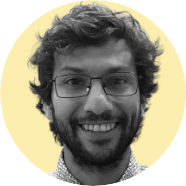
Mohamed Najah
Université de Sherbrooke
Biography
Mohamed received his engineering degree in microelectronics from École Nationale Supérieure des Mines de Saint-Etienne (ENSMSE), France, and his master’s degree in Nanotechnology from Université Aix-Marseille – ENSMSE, France, both in 2014. From 2015 to 2016 he was an R&D engineer in ENSMSE and ST-Microelectronics Rousset where he worked on the fabrication and characterization of Back-end-of-line thermos-mechanical MEMS switches. He completed his Ph.D. at the Université de Sherbrooke (UdS) from 2016 to 2022. He carried-out research on Wafer-Level Packaged (WLP) RF MEMS, manufactured using the C2MI industrial prototyping fabrication lines, with an emphasis on the performance and reliability of electromechanical contacts. Since 2022, he has been a postdoctoral fellow at the C2MI where he is actively involved in the development of Fan-Out WLP fabrication process. His research interests include embedded electronics, MEMS, packaging, process integration, and reliability of microsystems.
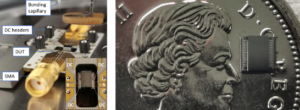
Characterization of a Wafer-Level Packaged Au−Ru/AlCu Contact for Micro-Switches - JMEMS.2022.3172920

Mustafa Hammood
University of British Columbia
Biography
Mustafa Hammood is a Ph.D. candidate at the University of British Columbia. His primary research focus is on developing unique and high-performance silicon photonic WDM filter devices and translating them from the prototyping stage to commercially viable devices that can be fabricated on mass-producible silicon photonic platforms. In addition to his research, he is passionate about advancing the silicon photonics ecosystem in general, and in Canada particularly, by developing electronic-photonic-design-automation (EPDA) solutions and process design kits (PDKs), photonic test and measurement solutions, and helping advance silicon photonic fabrication and packaging efforts at SiEPICfab. Additionally, he co-founded a silicon photonic design house start-up, SiEPIC Kits, and he is passionate about entrepreneurship in the photonics industry in general.

Raphael Dawant
Université de Sherbrooke
Biography
Raphaël holds a master’s degree in physical engineering from the University of Louvain in Belgium and prepared his master’s thesis on the fabrication of spintronic devices at IMEC in Leuven, Belgium. He is presently a Ph.D. student at the Université de Sherbrooke’s Department of Electrical and Computer Engineering, where he leads research on resistive memories for artificial intelligence applications. His research focuses on the manufacturing of nanodevices using plasma-etching, CMP, and electron beam lithography. By providing an industrial-compatible fabrication method, Raphaël’s thesis look for futur integrated circuits, more e efficient and less energy consuming, for artificial intelligence applications. Raphaël is also developing electron beam lithography methods for 3IT and industrial partners while working as staff support.

Ryan Plumadore
University of Ottawa
Biography
Ryan Plumadore is a Ph.D. student in the Department of Physics at the University of Ottawa. Before his Ph.D., he completed his B.Sc. (Hons) in Physics-Mathematics, and in his master’s thesis he studied the fabrication and characterization of two-dimensional (2D) materials with low temperature & ultrahigh vacuum scanning tunneling microscopy and spectroscopy (STM/S). His Ph.D. thesis extends that goal to the fabrication of ultraclean 2D van der Waals heterostructure devices, specifically tailored for STM experiments. He is a recipient of the Ontario Graduate Scholarship.
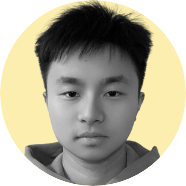
Shangxuan Yu
University of British Columbia
Biography
Shangxuan completed a B.ASc in Material engineering at the University of British Columbia. He is finishing his M. ASc in Electrical and Computer Engineering Department and turning to Ph.D. study under Prof. Lukas Chrostowski’s supervision.
Shangxuan is passionate about nanofabrication technologies. He spent most of his time in SBQMI ANF at UBC or 4D labs at SFU doing process development and characterization during his master’s study. Shangxuan’s research focuses on hybrid integration utilizing photonics wire bonding (PWB) to integrate different photonics components (DFB laser, optical fibre, integrated photonics chips etc.) and material platforms (SOI, III-V and LiNbO3). To fully exploit the power of PWB hybrid integration, he is exploring building compact hardware systems for optical computing applications. Shangxuan is also working on developing an on-chip integrated spectrometer enabled by topological structure and aiming to push the resolution beyond the commercially available desktop products.
Program Committee

Alan Renaudin, Jr. Eng., Ph.D.
Alan Renaudin is a business development director at C2MI, Strategic partnership and Marketing and IEEE Entrepreneurship manufacturing resources lead. Entrepreneur at heart and intrapreneur on the field, he was previously involved in the Photonic business as an entrepreneur with a strong background in lab-On-chip applications and he holds a doctorate in microelectronics. Passionate about driving the deep tech industry into a new era of innovation ecosystem, Alan focuses on accelerating the development and commercialization of microelectronics components enabling digital technologies. Confident that a collaborative ecosystem, involving international industrial, governmental, and academic players is key to accelerating commercialization, he is unfolding a world-class network, based on C2MI team, partners, and collaborators, dedicated to the maintenance of a market driven dynamic and rigorous expertise.

Andrew Fung, PhD
Technical Team Lead – MEMS, Nanofabrication, Integration
CMC Microsystems
Andrew Fung seeks to advance technology development agendas for micro- and nano-enabled systems. He brings 20 years of international experience in industry teams and academic research with broad awareness of integrated microsystems and applications experience in biomedical nanotechnology. He enjoys multi-disciplinary technology development that combines business modelling with user focus. As a Technical Team Lead at CMC Microsystems, he drives technology strategy and product development for a growing portfolio of MEMS processes, emerging nanofabrication technology, and heterogeneous integration. Andrew holds a PhD in Biomedical Engineering from the University of California Los Angeles and a BASc in Electrical Engineering from University of Waterloo.

Annie Dallaire, MSc MBA
Vice-President, Business development
C2MI
Annie Dallaire has been working in the field of microelectronics, especially in the semiconductor manufacturing field, for more than 20 years. She joined C2MI’s team as Director of Business Development in December 2016. Now, Vice-president, Business Development, her role consist, among other things, to developing appropriate strategies for C2MI members and clients, as well as supporting them through their projects and product development. She is also one of C2MI spokesperson in many external technical and scientific events.
She first worked as a process scientist in plasma etching for 9 years at Mitel Semiconductors (now Teledyne DALSA Semiconductors). This position allowed her to acquire a strong knowledge of the CMOS, CCD and MEMS manufacturing processes. She was involved in several process improvement, cost reduction and technological development projects as well as project management.
She was then assigned the management of a group of development scientists within the same company. Annie developed a solid experience in day-to-day operation management, including engineering management with projects focused on capacity expansion, cost reductions, productivity improvement and quality control.
Annie holds a Bachelor’s degree in Physics and a master’s degree in plasma physics from the Université de Montréal, as well as a MBA from Université Laval.

Dominique Drouin, PhD EIT
Professor, Faculty of Engineering
Université de Sherbrooke
Prof. Drouin hold an NSERC/IBM Industrial Research Chair NSERC/IBM in High-Performance Heterogeneous Integration developing state-of-the-art microelectronic packaging technology. Within this program he his developing innovative approach targeting high density interconnect for high performance computing applications. He also has developed an expertise in the fields of nanoelectronics (Resistive RAM, pH/gas sensors) and more specifically targeting BEOL integration on FD-SOI CMOS technology. He also works on developing and fabricating dedicated hardware for machine learning and neuromorphic applications. This expertise is also applied to enable largescale silicon spin qubit platform using memristor based neuromorphic circuits for quantum dots autotuning for spin qubit control.

Jocelyn Bachman, PhD
Photonics Device Specialist
Applied Nanotools Inc.
As the Photonics Device Specialist at Applied Nanotools, Jocelyn helps customers move their designs from concept to reality. She provides both design and fabrication support for Applied Nanotools’ NanoSOI Photonics Fabrication Service and Interposer Fabrication Service. Jocelyn also manages the NanoSOI Process Design Kit, including the development of new designs. Jocelyn holds a PhD in Physics, an MSc in Electrical Engineering, and a BSc in Engineering Physics, all from the University of Alberta. She was a Vanier Canada Graduate Scholarship recipient and has over ten years of hands-on microfabrication and characterization experience.

Karin Hinzer, MSc PhD
Vice-Dean, Research of the Faculty of Engineering and Professor
University of Ottawa
She is the Vice-Dean, Research of the Faculty of Engineering, the University Research Chair in Photonic Devices for Energy and a Professor at the School of Electrical Engineering and Computer Science with a cross-appointment in the Department of Physics at the University of Ottawa. She received the BSc, MSc, and PhD degrees in physics from the University of Ottawa, Ottawa, Ontario, Canada, in 1996, 1998, and 2002, respectively. She has made pioneering contributions to the experimental physics of quantum dots marked by two landmark papers in Science. She gained extensive experience in the design and fabrication of group III-V semiconductor devices while at the National Research Council Canada, Nortel Networks and then Bookham (now Lumentum). Cost reduction strategies and liaison with remote fabrication facilities strongly feature in her industry experience.
Professor Hinzer joined the University of Ottawa in 2007 where she founded the SUNLAB, the premier Canadian modelling and characterization laboratory for next generation multi-junction solar devices and concentrator systems. Professor Hinzer’s research involves developing new ways to harness the sun’s energy. From 2007 to 2017, she was the Tier II Canada Research Chair in Photonic Nanostructures and Integrated Devices. In 2010, she was the recipient of the Inaugural Canadian Energy Award with industry partner Morgan Solar for the development of more efficient solar panels. In 2015, she received the Ontario Ministry of Research and Innovation Early Researcher Award for her contributions to the fields of photonic devices and photovoltaic systems and in 2016, she was the recipient of the University of Ottawa Young Researcher Award. She is a member of the College of New Scholars, Artists and Scientists of the Royal Society of Canada and an IEEE senior member. Professor Hinzer is the principal investigator of the Natural Sciences and Engineering Research Council of Canada Collaborative Research and Training Experience Program titled “Training in Optoelectronics for Power: from Science and Engineering to Technology” (NSERC CREATE TOP-SET), a multi-disciplinary training program involving three universities and aiming to train over 100 students in seven years.
Professor Hinzer is an editor of the IEEE Journal of Photovoltaics. She has published over 170 refereed papers, trained over 150 highly-qualified personnel and her laboratory has spun-off three Canadian companies in the energy sector. Her research interests include new materials, high efficiency light sources and light detectors, solar cells, solar modules, new electrical grid architectures and voltage converters.

Lukas Chrostowski, PhD
Professor of Electrical and Computer Engineering
University of British Columbia
Lukas Chrostowski is a Professor of Electrical and Computer Engineering at the University of British Columbia, Vancouver, BC, Canada. Born in Poland, he earned the B.Eng. in electrical engineering from McGill University and the PhD in electrical engineering and computer science from the University of California at Berkeley. With research interests in silicon photonics, optoelectronics, high-speed laser (VCSEL) design, fabrication and test, for applications in optical communication systems and biophotonics, he has published more than 200 journal and conference publications.
He co-edited a book “High-Speed Photonics Interconnects” (2013), and co-authored the book “Silicon Photonics Design” (Cambridge University Press, 2015). Dr. Chrostowski served as the co-director of the University of British Columbia AMPEL Nanofabrication Facility (2008-2017). He is the Program Director the NSERC CREATE Silicon Electronic-Photonic Integrated Circuits (Si-EPIC) research training program in Canada, and has been teaching numerous silicon photonics workshops and courses since 2008.
He spent his 2011-12 sabbatical at the University of Washington, Seattle, with Michael Hochberg’s group. Chrostowski received the Killam Teaching Prize at the University of British Columbia in 2014. He was an elected member of the IEEE Photonics 2014-2016 Society Board of Governors and serves as the Associate VP of Education (2014-). He was awarded a Natural Sciences and Engineering Research Council of Canada Discovery Accelerator Supplements Award in 2015.
Logistics Committee
Alex Anees
Research Operations Facilitator
Stewart Blusson Quantum Matter Institute

David Weekes, PhD
Business Innovation Manager
Stewart Blusson Quantum Matter Institute

Sarah Neville
Senior Coordinator, Prototyping Services
CMC Microsystems

Steve Gou
Project Manager
Stewart Blusson Quantum Matter Institute
Venue
ADDRESS
4050 Whistler Way
Whistler, British Columbia V8E 1H9, Canada
+1.604.932.1982
GROUP RATE
To book ONLINE, the preferred method, click edit stay to adjust dates required.
To book by TELEPHONE, please contact our dedicated Reservations Center which is open 24-hours for your convenience, by dialing 1-800-515-4050, press 1 for Reservations and provide them with the Group Code: LABFAB
DEADLINE
Deadline to Book Hotel with preferred rate: September 7, 2022
Individual Guests will be required to guarantee their reservations by use of a major credit card. The Hotel will accept cancellation of Guest reservations up to 14 days prior to arrival, after that time a full stay penalty will be processed on the individual’s credit card or master account, depending on the room & tax method of payment.
TRAVEL
Travel Options – www.whistler.com/getting-here
Skylynx Shuttle – https://www.yvr.ca/en/passengers/transportation/long-distance-scheduled-buses/whistler