
LAB2FAB
2026 WORKSHOP
FROM PROTOTYPES TO PRODUCTS
August 24, 2026
Ottawa, Ontario
SUPPORTED BY

LAB2FAB 2026
LAB2FAB Workshop 2026 will take place at the University of Ottawa on August 24, 2026.
The Nanofabs across Canada are a precious resource for start-ups to build hardware prototypes. Hardware companies face barriers to building products, barriers which are reduced by nanofabs. but when they sell a product into a customer’s systems, they are very sticky. CMC tracks over 240 hardware startups, spawned from nanofabs, of which half are still running after 25 years and the five-year survival rate for these companies is over 90%.
LAB2FAB celebrates these nanofabs and their successful clients. Canada does very well on the global scene with over 40 nanofabs across the country, not including the NRC labs. Take a look at https://www.cmc.ca/canadian-mnt-labs/ and come join us to hear more about capabilities and real-life success stories.
CMC Microsystems maintains strategic relationships with international partners to accelerate micro-nanotechnology innovation. CMC is a key member of the Global Nanolab, an international consortium connecting world-class cleanrooms and expertise from Canada, Australia, Europe, the United States, and Japan. This “network of networks” empowers academic and industry researchers by providing access to state-of-the-art equipment and standardized best practices.
The 2026 LAB2FAB Workshop is a part of 21st Canadian Semiconductor Science and Technology Conference, CSSTC.
Registration
Early Registration Deadline: July 12, 2026
Program
Monday, August 24, 2026
7:30 – 8:30
Registration and coffee
8:30 – 8:40
Welcome and Introduction
8:40 – 9:30
Canadian Laboratory Landscape and FABrIC for process development
Tim Warland, Senior Advisor, FABrIC Challenge Projects, CMC Microsystems
9:30 – 10:00
Canadian Photonics Fabrication Centre (CPFC)
Velko Tzolov, Director General, CPFC
10:00 – 10:30
Networking
10:30 – 11:00
Collaborative Pathways for Canada’s Advanced Semiconductor Technologies
This presentation explores the journey from discovery to development and deployment in advanced semiconductor, photonic, electronic, and quantum technologies. It highlights key challenges in translating early-stage innovation into practical applications, including technology readiness, process development, integration, reliability, and skills development. Emphasizing collaboration among research organizations, academia, fabrication facilities, and industry, it presents strategies to accelerate innovation, reduce technical risk, and enable the successful deployment of emerging technologies.
Simon Wingar, Advanced Technology Fabrication Quantum, Nanotechnology Research Centre
11:00 – 11:30
4D LABS - Simon Fraser University
Behraad Bahreyni, Professor, Graduate Student Supervisor, Mechatronic Systems Engineering, Simon Fraser University
11:30 – 12:00
MiQro Innovation Collaborative Centre (C2MI)
Philippe Vachon, Director of Business Development, C2MI
12:00 – 13:00
Lunch
13:00-13:30
The Centre for Emerging Device Technologies and the Canadian Centre for Electron Microscopy - McMaster University's key Core Platforms for semiconductor, communication and quantum science
Andrew Knights, Professor, Engineering Physics, McMaster University
13:30 – 14:00
TransEON – GaN Innovations
Vallen Rezazedeh, Founder and CEO, TransEON Inc.
14:00 – 14:30
From Northern Electric R&D lab, through Bell Northern Research, and Nortel, to the CPFC
Anthony J. SpringThorpe, Principal Research Officer, CPFC
14:30 – 15:00
Toronto Nanofabrication Centre (TNFC)
Wai-Tung Ng, Director of TNCF
Professor, Electrical and Computer Engineering, University of Toronto
15:00 – 15:30
Networking
15:30 – 16:00
École Polytechnique de Montréal
Oussama Moutanabbir, Professor and Canada Research Chair, École Polytechnique de Montréal
16:00 – 16:30
uOttawa's Photonics NanoFab, the SUNLAB and New Facilities
Karin Hinzer, Founder and Director of SUNLAB
Vice-Dean, Research, Faculty of Engineering, University of Ottawa
16:30 – 17:00
Carleton University NanoFab
Leo MacEachern, Associate Professor & Chair, Carleton University
17:00 – 17:10
Closing remarks
Tim Warland, Senior Advisor, IoT Products, FABrIC, CMC Microsystems
Speakers
Behraad Bahreyni
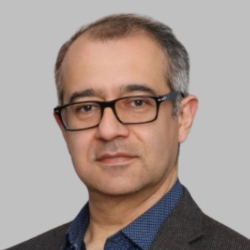
Dr Behraad Bahreyni, SMIEEE, PEng, is a professor and the Director of the Intelligent Sensing Laboratory at Simon Fraser University, BC, Canada. He received his BSc from Sharif University of Technology, Iran, and MSc and PhD degrees in electrical engineering from the University of Manitoba, Canada, in 1999, 2001, and 2006, respectively. He was a post-doctoral researcher with the NanoSicence Centre at Cambridge University, UK, where he researched interface circuit design for microresonators. He joined SFU in 2008 after a one-year tenure in the industry as a senior MEMS design engineer. In 2016, he was with NXP Semiconductors, the Netherlands, developing advanced signal processing methods for sensing. His research activities focus on the design and fabrication of micro- and nano-sensors for applications in consumer electronics, mining, automotive, and space exploration. Dr Bahreyni has supervised the work of more than 60 postgraduate researchers and contributed to more than 180 technical publications. He is the Microtechnologies Lead at SFU 4D LABS, helping secure funding and set long-term goals and vision for the facility.

Karin Hinzer
Karin Hinzer is a Professor at the School of Electrical Engineering and Computer Science at the University of Ottawa and the University Research Chair in Photonic Devices for Energy. She has made pioneering contributions to the experimental physics of quantum dots. She gained extensive experience in the design and fabrication of group III-V semiconductor devices while at the National Research Council Canada, Nortel Networks and then Bookham (now Lumentum).
Professor Hinzer joined the University of Ottawa in 2007 where she founded the SUNLAB, the premier Canadian modelling and characterization laboratory for next generation optoelectronic devices and photovoltaic systems. Her research involves developing new techniques and systems for photonics and semiconductor applications. From 2007 to 2017, she was the Tier II Canada Research Chair in Photonic Nanostructures and Integrated Devices. In 2010, she was the recipient of the Inaugural Canadian Energy Award with industry partner Morgan Solar for the development of more efficient solar panels. In 2015, she received the Ontario Ministry of Research and Innovation Early Researcher Award for her contributions to the fields of photonic devices and photovoltaic systems and in 2016, she was the recipient of the University of Ottawa Young Researcher Award. She is an IEEE senior member and was a member of the College of New Scholars, Artists and Scientists of the Royal Society of Canada from 2015 to 2022. Professor Hinzer was the principal investigator of the Natural Sciences and Engineering Research Council of Canada Collaborative Research and Training Experience Program titled “Training in Optoelectronics for Power: from Science and Engineering to Technology” (NSERC CREATE TOP-SET, 2017-2024), a multi-disciplinary training program involving three universities which trained 169 students and postdoctoral fellows. Professor Hinzer is an editor of the IEEE Journal of Photovoltaics. She has published over 240 refereed papers, trained over 210 highly-qualified personnel, and her laboratory has spun off three Canadian companies in the energy sector. Her research interests include new materials, high-efficiency light sources and light detectors, solar cells, solar modules, new electrical grid architectures and power converters.

Andrew P. Knights
Professor Andrew P. Knights is a leading Canadian researcher, educator, and research‑infrastructure strategist whose career has helped shape the national landscape in semiconductor device physics, and in particular silicon photonics. As a Professor of Engineering Physics at McMaster University, he has built a reputation for combining deep scientific expertise with an ability to mobilize large, interdisciplinary teams around ambitious research and innovation goals. His work bridges fundamental physics, advanced instrumentation, and industry‑driven technology development.
Knights’ academic foundation includes a B.Sc. (First Class Honours) in Physics and Mathematical Science (CNAA) and a Ph.D. in Experimental Solid State Physics from the University of East Anglia (UK). His early career in industry, first as Principal Research Engineer at Bookham Technology, and later as co‑founder of KT3 Photonics, and then as lead Silicon Architect with Ranovus Inc., provides a strong connection between research and application. This dual perspective has shaped his approach to research: rigorous, application‑aware, and oriented toward long‑term impact.
At McMaster, Knights has held several senior leadership roles, including Acting Vice‑President (Research), Associate Vice‑President (Research), and Director of the Centre for Emerging Device Technologies. In these positions, he has led major research‑infrastructure initiatives, championed interdisciplinary institutes, and strengthened McMaster’s national and international research partnerships. He is widely recognized for his ability to articulate compelling strategic visions, secure large‑scale funding, and build research ecosystems that accelerate discovery, training, and innovation. Over his career, he has secured more than $30 million in research funding and authored over 285 peer‑reviewed publications.
Scientifically, Knights is known for pioneering contributions in silicon photonics, integrated optical devices, and defect characterization using positron annihilation spectroscopy. His work has advanced understanding of quantum‑scale processes in semiconductor materials and enabled new device concepts for communications, sensing, and quantum technologies. He is equally committed to training the next generation of researchers, mentoring students and postdoctoral fellows who now hold leadership roles across academia, industry, and government.
Knights is currently leading the development of “Unveiling Quantum Structures and Processes: A Multimodal Beam Facility for Next‑Generation Semiconductor and Quantum Materials”, a transformative research infrastructure initiative designed to give Canadian researchers unprecedented capabilities for probing quantum materials, semiconductor defects, and photonic structures. His vision emphasizes versatility, platform‑agnostic design, and national competitiveness—ensuring that Canada remains at the forefront of quantum and semiconductor innovation.

Leonard MacEachern
Leonard MacEachern received the B.Sc. degree from Acadia University, Wolfville, NS, Canada, the B.Eng. and M.A.Sc. degrees from the Technical University of Nova Scotia, Halifax, NS, Canada, and the Ph.D. degree from the University of Waterloo, Waterloo, ON, Canada. He is currently an Associate Professor and Chair of the Department of Electronics at Carleton University, Ottawa, ON, Canada.
He has three decades of experience spanning industry, consulting, entrepreneurship, and academia. His research interests include microelectronics, low-power CMOS circuits for sensing systems, radio-frequency and mixed-signal integrated circuits, and intelligent sensing technologies for wearable and biomedical applications. He has authored numerous technical publications in these areas and holds several Canadian and U.S. patents related to telecommunications integrated circuits, wearable systems, and signal processing. He is a licensed Professional Engineer with the Association of Professional Engineers of Nova Scotia and is a member of IEEE.

Oussama Moutanabbir
Oussama Moutanabbir is a Full Professor of Engineering Physics and Scientific Director of Institut Lassonde at École Polytechnique de Montréal. He held a Canada Research Chair on Nano and Quantum Semiconductors, and his work focuses on semiconductors and their integration in photonic, optoelectronic, energy, and quantum applications. Before joining École Polytechnique de Montréal, he worked at the Max Planck Institute of Microstructure Physics in Germany and Keio University in Japan. From 2012 to 2016 he was appointed as an Invited Research at RIKEN Advanced Science Institute in Japan. He also holds a joint appointment as Adjunct Professor at North Carolina State University in the USA. He established and led a national network on compact mid-infrared and terahertz photonics supported by Defence Canada through the Innovation for Defence Excellence and Security program. Under the same DND program, he is currently leading a second network on On-Chip Mid-Infrared Quantum Sensors. He is the founding director of PolyAPT, the Canadian facility for Atom Probe Tomography. He recently received the Leibniz IKZ International Award from the Leibniz Association in Germany in recognition of his contributions to Group IV semiconductor quantum engineering. He is the co-founder of Wáhta Photonic Technologies, a startup developing infrared sensing and imaging technologies.
Wai-Tung Ng
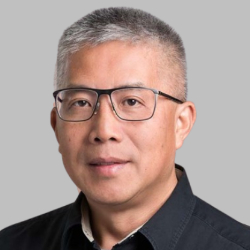
Wai Tung Ng is a Professor at The Edward S. Rogers. Sr. Department of Electrical & Computer Engineering, University of Toronto. Prof. Ng received his BASc, MASc and PhD degrees in Electrical Engineering from the University of Toronto, in 1983, 1985 and 1990, respectively. In 1990, Dr. Ng joined the Semiconductor Process and Development Center of Texas Instruments, Dallas TX, to work on power devices for automotive applications. His academic career started in 1992 with the Department of Electrical and Electronic Engineering, at the University of Hong Kong. Dr. Ng returned to the University of Toronto in 1993. He was promoted to Associate Professor in 1998 and full Professor in 2008. His research interests cover a wide spectrum, ranging from smart power ICs, power management ICs, integrated DC-DC converters, smart gate driver ICs, silicon and GaN power semiconductor devices, advanced CMOS and RF BJTs. Prof. Ng serves as the director of the Toronto Nanofabrication Centre at the University of Toronto since 2014. He is also an associate editor for IEEE Electron Device Letters since 2009. Prof. Ng is also the chair for the Technical Committee in Power Devices and ICs for the IEEE Electron Devices Society (since 2018).

Vallen Rezazadeh
Vallen Rezazadeh is the founder and CEO of TransEON Inc., a Canadian startup developing next-gen GaN device and process technology for various applications. Prior to TransEON, he was with IBM Research at the CNSE/Albany NanoTech development fab in Albany, NY, USA, where he oversaw electrical test operations for MRAM and advanced CMOS nodes, collaborating with various industry partners including Samsung, GlobalFoundries, and Applied Materials. Vallen received the B.Sc. degree in engineering physics and the M.Sc. degree in electrical engineering with a specialization in solid-state electronics from the University of Alberta.

Nathanael Sieb
Nathanael Sieb is the Director of Operations and Administration at 4D LABS, an Advanced Materials core facility at Simon Fraser University. He is responsible for day-to-day operations, business development, and long-term sustainability planning for the facility.
Over the last twenty years, he has worked in the nanofabrication and advanced characterization field in a variety of roles. As a researcher, he worked on developing new techniques for the self-assembly of materials, as a technician, he was responsible for training and maintenance on a diverse set of fabrication tools, and as a director, he is responsible for an open-access facility serving the needs of over 200 companies and 2000 researchers.
4D LABS is an $85mil core facility at Simon Fraser University focused on advanced materials research. It officially opened in 2010, and since then, it has continued to attract researchers and funding, and it has been critical to the rapid growth of the BC Tech sector. Through multiple grants, 4D LABS has continued to grow and now offers over 100 tools throughout its 30,000 sq-ft facility. Research in the facility spans multiple disciplines, including clean tech, quantum, life science, MEMS, and more.
Nathanael Sieb received his B.Sc. in Chemical Physics in 2005 and his M.Sc. in Chemistry in 2008 from Simon Fraser University.
Anthony J. SpringThorpe
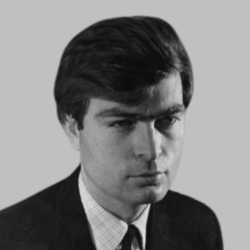
Dr. A.J. (Tony) SpringThorpe graduated with a B.Sc. in Physics in 1963 and a Ph.D. in solid state physics in 1967 from the University of Sheffield, England; thesis topic “The electrical and optical properties of NiO and CoO”. This was followed by a three-year post-doctoral fellowship at the University of Bath, England. In this work, techniques were developed to produce many of the ternary analogues of III-V compound semiconductors. At the conclusion of the fellowship, in October 1969, he joined Northern Electric R&D Labs, later to become Bell-Northern Research, and now Nortel Networks. During the next ten years, this work led to the development of processes for the preparation and fabrication of a wide range of optoelectronic devices, many of which saw application in the first generation of fiber optic transmission systems. He designed and built the first Canadian MOCVD system in 1978. Building on this experience, in the mid 80’s, he was instrumental in introducing MOCVD and Molecular Beam Epitaxy (MBE) to Nortel for the production of the next generation of III-V compound device structures. Dr. SpringThorpe was manager of epitaxy from ’78 to ‘97 and then became an independent contributor for his final five years before retirement from Nortel. As a consequence of his industrial career, he currently holds numerous patents on various aspects of III-V compound semiconductor epitaxy and devices, and has contributed to many publications and presentations on materials and devices.
Immediately after retirement from Nortel, he joined the fledgling Canadian Photonics Fabrication Centre as a principal research officer in the Fall of 2002, with responsibility for epitaxy. In this role, he has been instrumental in specifying and commissioning the MOCVD system that is the foundation of the CPFC’s III-V compound materials capability.
In 1977, he was awarded the W. Lash Miller prize of the Electrochemical Society for his work on the development of III-V compound materials and devices. In 1997, he was also awarded the Nortel presidents’ prize for technology cascade. This was in recognition of his long-term contribution to the success of the Nortel optoelectronics program. In 2004, he was awarded a medal by the Canadian Association of Physics for his contributions to industrial physics during his time with Nortel, and in 2005, he was named MBE innovator of the year by the North American MBE conference for his contributions to in-situ monitoring techniques for molecular beam epitax.
In addition, he has mentored more than thirty students, some of whom have gone on to successful university careers – most notable amongst them are Prof. Ted Sargent of the University of Toronto, and Prof Axel Becke of Dalhousie University. He was also an adjunct professor of Engineering Physics at McMaster University for a five-year period in the 90’s.
Since joining the CPFC, he has continued to collaborate with groups within IMS – most notably that of H.C. Liu, for whom he continues to supply state-of-the art device structures for THz source and detector applications – this is reflected in the many publications from the group that acknowledge his material contributions.
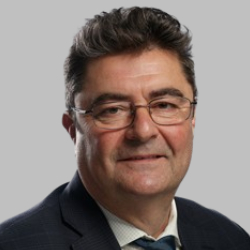
Velko Tzolov
Dr. Velko Tzolov joined the NRC in 2010, and is currently the director general of the Canadian Photonics Fabrication Centre. He was the director general of the Advanced Electronics and Photonics Research Centre from March 2021 to December 2022. Prior to this, Dr. Tzolov was Ottawa’s regional director of the NRC’s Industrial Research Assistance Program (NRC IRAP), managing a significant portfolio of small and medium-sized enterprises developing innovative technologies, and key IRAP innovation ecosystem initiatives. He was also an industrial technology advisor with IRAP, and a business development officer with the Energy, Mining and Environment portfolio, which focussed on clean energy, and on-grid energy storage solutions in Vancouver.
Between 1995 and 2010, Dr. Tzolov was the founder and senior-level executive of several Canadian technology firms such as: Optiwave Systems, Peleton Photonics Systems and Palladium 7 Corporation. During these years, he was involved in managing industrial technology development and commercialization. He was also very instrumental in major business transactions such as: securing venture capital / debt financing, mergers and acquisitions, and IP asset transactions. Dr. Tzolov also managed sizeable technology deals and partnerships via multinational business development teams to over 50 countries worldwide.
In 1993, Dr. Tzolov was awarded a two-year postdoctoral fellowship by the Université du Québec en Outaouais in the field of fiber optics.
Dr. Tzolov has a PhD in Physics, and a Master’s degree in Engineering Physics from Sofia University in Bulgaria. He also holds a Master of Business Administration degree from Ottawa’s Telfer School of Business. Dr. Tzolov is an adjunct professor at the Innovation Technology Management program at Carleton University’s Sprott School of Business.
Dr. Velko Tzolov was recognized as the Semiconductor Executive of the Year in May 2026, by the Canadian Semiconductor Council.
He is also a Fellow of The Engineering Institute of Canada.

Philippe Vachon
Philippe Vachon is Director of Business Development and Quantum Partnerships Lead at C2MI. He holds a Ph.D. in Electrical Engineering from the National University of Singapore and has a background in advanced microfabrication, microfluidics, and technology development. Prior to joining C2MI in 2025, he worked at REVIVO BioSystems in Singapore in the field of organ-on-a-chip technologies. At C2MI, Philippe supports companies in the development and industrialization of innovative technologies while fostering collaborations between industry, research organizations, and ecosystem partners.

Tim Warland
Tim Warland brings over 30 years of experience in the semiconductor industry, spanning design, testing, applications and sales engineering, and product management. His career includes roles at large enterprises as well as early- and mid-stage startups, gaining a deep understanding of the full product lifecycle from concept to commercialization. Over the past decade, Tim has dedicated his efforts to supporting entrepreneurs and startups, connecting them with test facilities, mentors, and advisors. He remains a strong advocate for strengthening Canada’s semiconductor capabilities and actively contributes his expertise to the regional innovation ecosystem.

Simon Wingar
Simon Wingar is currently a member of QN’s Advanced Technology Fabrication (ATF) Team. Prior to that he was the Director of Research and Development responsible for NRC’s Advanced Technology Fabrication and Canadian Photonics Fabrication Centre wafer fabrication and R&D facilities. He has over 40 years in the semiconductor wafer fabrication industry with the past 20 years at NRC. As part of his role at NRC he is focused on the development of new technologies, the introduction of new products and the delivery of advanced integrated photonic devices in support of industry needs. Prior to that, he has held numerous engineering and management positions in the private sector including: Bell Northern Research and Northern Telecom in Canada. INMOS, Marconi and Philips in the UK and Infinera in the USA. Throughout his career he has had the opportunity to work on a wide variety of wafer fabrication technologies, including CMOS, Bi-CMOS, GaAs HBT and GaN electronics and CdHgTe, GaSb, SiO2 and InP photonic technology platforms.
He holds a bachelor’s degree in Photographic Sciences from the Polytechnic of Central London as well as an MBA from the University of Ottawa